
Most punters hear about staking plans and assume a clever pattern can outrun a random number generator. My work modelling virtual RNG math for Easygo Gaming keeps me grounded in the same reality: no progression turns a negative expectation into a profit over time. best casino betting systems explained is less about cracking the house edge and more about choosing a rhythm that matches your bankroll, your patience, and the volatility you actually enjoy. When you treat a staking plan as a budgeting tool rather than a miracle, the whole conversation changes.
Flat staking and the arithmetic of staying power

Flat betting is the plainest approach on paper: you wager the same amount on every spin or hand, letting the session run until your predetermined stop point arrives. The appeal is discipline, because you are not chasing losses with escalating stakes, and the downside is equally straightforward – slow sessions can feel flat when a table or reel is running cold. In my simulations, flat staking rarely produces dramatic swings, which suits players who want to measure their entertainment cost against a fixed budget rather than a hoped-for payout. The trade-off is that you need enough runway for the variance to settle; a bankroll that is too thin will end the night before the numbers have a chance to breathe. I have run thousand-spin sessions where flat staking simply preserved capital while other progressions burned through it in a handful of bad streaks, and that kind of comparison is where the method earns its keep. If you want a quieter, more predictable pace, flat staking is defo the most honest starting point, though it will not manufacture excitement out of a low-volatility game.
This method works best for players who prioritize longevity over immediate payoff, accepting that variance will dictate the pace rather than aggression. For a deeper breakdown of bankroll management frameworks that complement this style, you can visit https://acyclovirus.com/. Ultimately, the strategy succeeds when you treat each wager as a fixed cost rather than an emotional reaction to the previous outcome.
Progression plans and why sequences still meet randomness
Progressive staking systems, from the classic Martingale up to more layered sequences, ask you to raise your wager after a loss and step back after a win. The logic sounds tidy: recover previous setbacks with one winning bet and walk away with a small profit. The catch is that randomness does not care about your sequence, and a long losing run can push stakes into territory your bankroll or the table limit cannot support. I have watched players rebuild a Martingale on paper and then hit a six-loss streak that would require a bet larger than the maximum allowed, which is where the plan breaks regardless of how neat the spreadsheet looks. Some operators I have spoken with argue that progression tools are useful teaching aids because they make bankroll management visible, while others worry they encourage overconfidence in a system that cannot alter the underlying odds. Both views carry weight, and the honest read is that progression can structure a session without ever guaranteeing a result. The wisest use is a capped version with a hard exit point, so the sequence remains a pacing device rather than a promise.
| System | Staking behaviour | Typical risk profile | Best fit |
|---|---|---|---|
| Flat staking | Same amount every round | Lower volatility of drawdown | Budget-conscious sessions |
| Martingale | Double after loss, reset on win | High exposure to long losing runs | Short, tightly capped play |
| D’Alembert | Add one unit after loss, subtract after win | Moderate, slower recovery | Players wanting gentle pacing |
| Paroli | Increase after wins, stop after a set streak | Controlled upside, limited downside | Win-streak chasing with limits |
Building a plan around volatility, RTP, and your own limits
A staking system only makes sense when it is matched to the game’s volatility and the published RTP, because those numbers describe how often and how hard a title tends to pay rather than whether it will pay on any given spin. High-volatility slots can sit quiet for long stretches and then release a larger hit, which is a poor companion for a progression that assumes frequent recovery; lower-volatility games tend to give smaller, more regular returns that can suit flat or gently stepped staking better. I usually tell players to pick a plan first and then choose a game whose behaviour fits that plan, not the reverse, because forcing a Martingale onto a volatile reel is a mismatch that shows up quickly in simulation. One analyst I respect argues that players should treat RTP as a long-run reference point and volatility as the day-to-day experience, which is a useful split when you are deciding how aggressive a staking rhythm should be. Ella Morgan, Payments Strategy Director, Outback Gaming Research, notes that “staking discipline matters most when deposits, bonuses, and withdrawals all move through the same wallet, because a plan only holds if the money trail stays visible.” Eliza Walsh, Affiliate Partnerships Director, Wattle Gaming Partners, adds that “players respond better to systems that feel simple on a phone screen, so the maths has to survive a quick arvo session, not just a spreadsheet.” Around Newcastle, where sessions often start after work and run into the evening, that kind of practical fit tends to matter more than any theoretical edge.
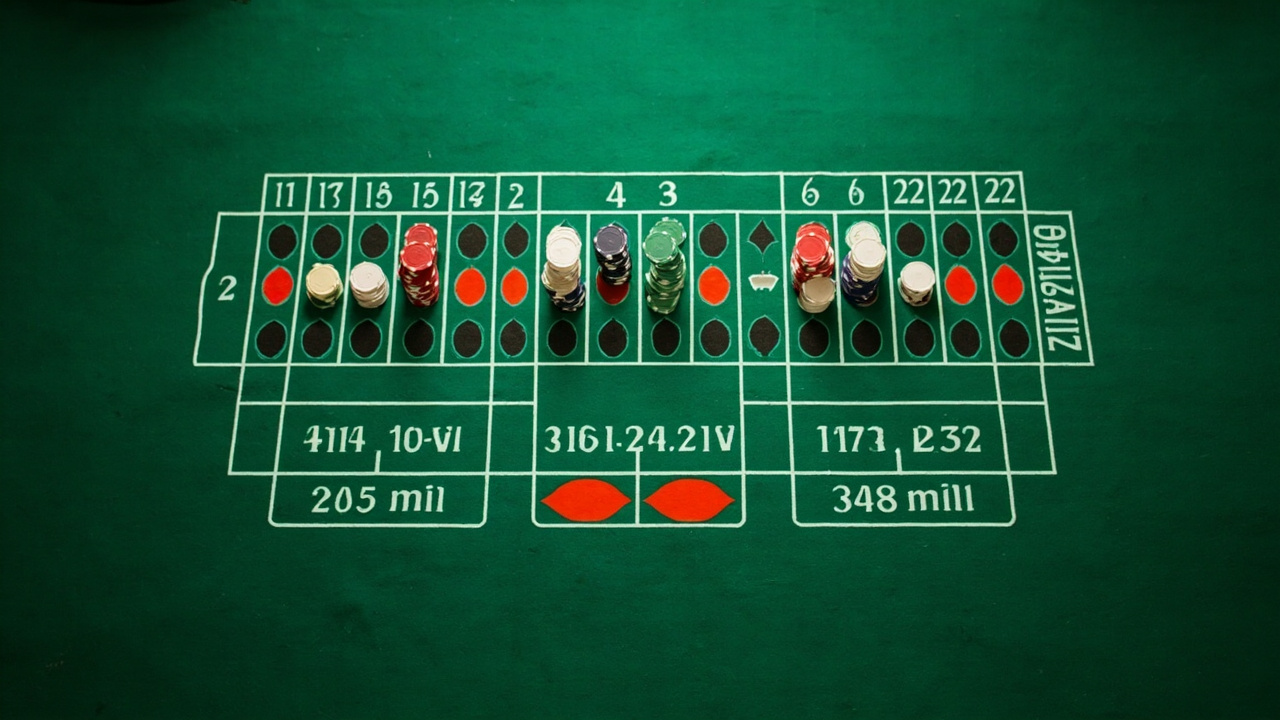
A good plan is really a set of limits dressed up as a strategy, and the most useful ones are the ones you can actually follow when the screen is busy and the mood is casual. Start with a bankroll you are comfortable losing, set a loss limit and a time limit before you sit down, and pick a staking rhythm that does not require you to override those boundaries when a streak goes the wrong way. If a progression feels like it is pushing you toward the table max or into your last hundred dollars, that is the moment to step back rather than double down. The aim is to make the session readable to yourself, so you know what you are spending and what you are hoping for without pretending the maths has changed in your favour. When the plan is modest, the game is chosen for the right volatility, and the exit rules are fixed in advance, the whole exercise becomes a more honest form of entertainment.